
BMI Calculator
Calculate BMI, healthy weight range, BMI Prime and Ponderal Index with a clear visual BMI graph.
BMI = 20.3 kg/m2 (Normal)
| Underweight | Less than 18.5 |
| Normal | 18.5 to 24.9 |
| Overweight | 25 to 29.9 |
| Obesity Class 1 | 30 to 34.9 |
| Obesity Class 2 | 35 to 39.9 |
| Obesity Class 3 | 40 or greater |
MI Calculator – Calculate Your Body Mass Index
Knowing your Body Mass Index (BMI) can give you a quick idea of how your body weight compares with your height. Our BMI Calculator lets you calculate your BMI instantly by entering your height and weight. You can use it to understand which BMI range you fall into and get a simple starting point for tracking your health and fitness goals.
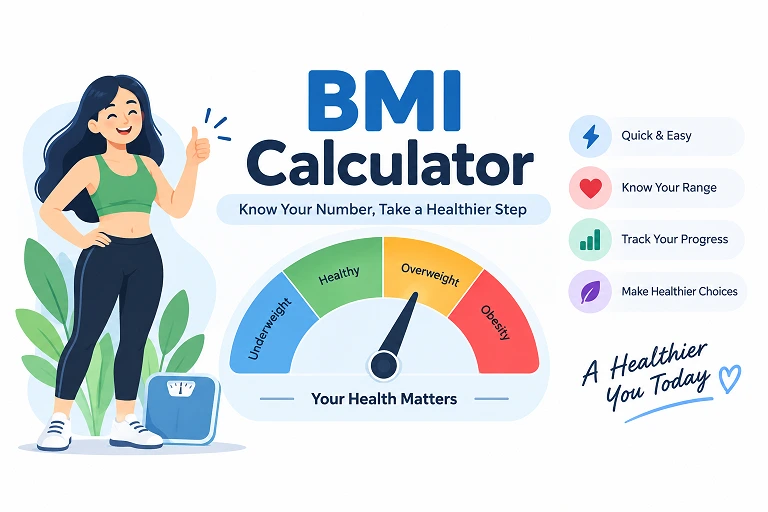
What Is BMI?
BMI (Body Mass Index) is a numerical value calculated from a person's weight and height. It is commonly used as a screening measurement to classify weight into categories such as underweight, healthy weight, overweight, and obesity.
BMI does not directly measure body fat and cannot tell the difference between muscle, bone, and fat. Therefore, it should be considered a general screening tool rather than a complete assessment of an individual's health.
BMI Formula
The standard BMI formula is:
BMI = Weight (kg) ÷ Height² (m)
For example, if a person weighs 70 kg and is 1.75 meters tall:
BMI = 70 ÷ (1.75 × 1.75)
BMI = 22.86
This result falls within the commonly used healthy weight BMI range for adults.
BMI Formula Using Pounds and Inches
If your weight is in pounds and height is in inches, you can use:
BMI = (Weight in pounds × 703) ÷ Height² in inches
Our calculator handles the calculation automatically, so you don't need to perform the formula manually.
Adult BMI Chart
The following BMI categories are commonly used for adults:
| BMI Range | Category |
|---|---|
| Below 18.5 | Underweight |
| 18.5 – 24.9 | Healthy Weight |
| 25.0 – 29.9 | Overweight |
| 30.0 or higher | Obesity |
BMI Range at a Glance
Underweight → Below 18.5
Healthy Weight → 18.5 – 24.9
Overweight → 25.0 – 29.9
Obesity → 30.0 and above
Adult BMI category ranges
Commonly used BMI ranges for adults. The obesity category begins at BMI 30 and has no fixed upper limit.
Adult BMI Chart
Find the BMI category that matches your calculated result.
How to Calculate BMI
Using a BMI calculator is straightforward:
- Enter your weight.
- Enter your height.
- Select the appropriate units, such as kilograms and centimeters or pounds and inches.
- Click Calculate BMI.
- Your BMI result and corresponding category will be displayed instantly.
The calculator saves you from manually applying the BMI formula and makes it easier to check your result whenever you need it.
What Does Your BMI Result Mean?
BMI Below 18.5 – Underweight
A BMI below 18.5 is classified as underweight for adults. A lower BMI can sometimes be associated with inadequate nutrition or other health factors, although BMI alone cannot identify the reason for a person's weight.
BMI 18.5 to 24.9 – Healthy Weight
A BMI between 18.5 and 24.9 is generally classified as the healthy weight range for adults. Staying within this range does not automatically mean a person is healthy, but it is one useful measurement when considered alongside other factors.
BMI 25 to 29.9 – Overweight
A BMI from 25 to 29.9 falls into the overweight category for adults. This result does not necessarily indicate poor health because factors such as muscle mass, body composition, age, and lifestyle can affect how BMI should be interpreted.
BMI 30 or Higher – Obesity
A BMI of 30 or higher falls into the obesity category for adults. Higher BMI values can be associated with an increased risk of certain health conditions, but BMI should not be treated as a diagnosis by itself.
Why Use a BMI Calculator?
A BMI calculator can be useful for quickly checking your weight-to-height ratio. It can help you:
- Calculate BMI within seconds
- Understand your general BMI category
- Track changes in BMI over time
- Set realistic health and fitness goals
- Compare your result with standard adult BMI ranges
- Avoid manual BMI calculations
For regular tracking, it can be useful to record your BMI at different points in time rather than focusing on a single measurement.
BMI Is Not the Same as Body Fat
One important limitation of BMI is that it does not directly calculate body fat percentage.
For example, someone who exercises regularly and has a high amount of muscle may have a higher BMI because muscle contributes to body weight. That person may not have excess body fat.
Similarly, two people can have the same BMI while having different amounts of body fat and different body compositions.
For a more complete picture of health, BMI may be considered alongside measurements such as waist circumference, body composition, physical activity, diet, age, and other individual factors.
BMI for Men and Women
The standard adult BMI calculation uses the same basic formula for both men and women:
BMI = Weight ÷ Height²
However, BMI does not account for differences in body composition between individuals. Therefore, the same BMI value can have different implications depending on a person's overall body composition and circumstances.
Is BMI Different for Children?
Yes. Children and teenagers should not generally be interpreted using the same fixed adult BMI categories.
For people aged 2–19 years, BMI is interpreted using age- and sex-specific growth charts and percentiles. A child's BMI should therefore be assessed using an appropriate pediatric BMI calculator rather than applying the adult categories directly.
BMI and Weight Management
BMI can be one useful starting point when monitoring body weight, but a healthy lifestyle involves much more than reaching a particular number.
Regular physical activity, a balanced diet, adequate sleep, stress management, and sustainable daily habits can all contribute to overall well-being.
If your BMI is significantly outside the usual adult range or you are concerned about changes in your weight, consider discussing your situation with a qualified healthcare professional.
Frequently Asked Questions
What is a normal BMI?
For adults, a BMI from 18.5 to 24.9 is commonly classified as the healthy weight range.
How accurate is a BMI calculator?
A BMI calculator accurately performs the BMI calculation when the height and weight entered are correct. However, BMI itself is only a screening measurement and does not directly measure body fat or overall health.
What is the ideal BMI?
There is no single BMI number that is ideal for everyone. For adults, the commonly used healthy BMI range is 18.5 to 24.9, but individual health depends on many factors beyond BMI.
Is a BMI of 25 bad?
A BMI of 25 falls at the beginning of the commonly used overweight category for adults. However, one BMI value does not provide a complete picture of a person's health or body composition.
Can muscular people have a high BMI?
Yes. Because BMI is based only on height and weight, people with substantial muscle mass can have a higher BMI even when they have relatively low body fat.
Does BMI work for children?
Adult BMI categories should not be used for children in the same way. Children's BMI is interpreted according to age and sex using growth-chart percentiles.
Can I calculate BMI without a calculator?
Yes. Use the formula:
BMI = Weight (kg) ÷ Height² (m)
For example, 80 kg and 1.80 m:
80 ÷ (1.80 × 1.80) = 24.69
Should I use BMI to decide whether I need to lose weight?
BMI can provide a useful starting point, but it should not be the only factor used to make health or weight-management decisions. Consider your overall health, body composition, lifestyle, and advice from a healthcare professional.
Important Note About BMI
BMI is a screening measurement, not a medical diagnosis. It does not directly measure body fat, muscle mass, or overall fitness. Results can be less informative for athletes, highly muscular individuals, older adults, pregnant women, and some other groups.
If you have concerns about your weight, nutrition, or health, consult a qualified healthcare professional for advice based on your individual circumstances.